The $500K Business That Taught Me
What NOT to Build
$500K in revenue. $100K+ net profit. 13 months. I walked away from it. Here’s why a profitable business isn’t the same as a good business.


Let me tell you about a business that looked like a win from every angle.
Palm Beach Home Pros. Home services lead generation. In 13 months, we did $500K in revenue with over $100K in net profit. Clients were paying. Cash was flowing. If you looked at the bank account, you’d say it was working.
Most people would’ve kept going. Scaled it up. Hired more people. Pushed for $1M. And from the outside, that would’ve made perfect sense.
But I was inside it. And from inside, I could see the cracks.
A Profitable Business Built on a Cracked Foundation
The model was linear. My time for money. Every dollar we made required me to show up, manage the campaigns, handle the clients, solve the problems. There was no system running while I slept. There was no product that scaled without my hours attached to it. If I stopped working, the revenue stopped coming.
That’s not a business. That’s a job with extra steps.

Then there was the partnership. 50/50 split. On paper, fair. In reality, the effort wasn’t 50/50. I was carrying a disproportionate amount of the execution — the strategy, the campaign management, the client communication, the problem-solving. A 50/50 equity split only works when the output is genuinely equal. When it’s not, resentment builds. Slowly at first. Then not slowly.
And the business itself had a ceiling. It was local lead gen. Geographically limited. Dependent on a handful of service verticals in one metro area. Even if we doubled revenue, the model was the same — more clients meant more of my time. The only way to scale was to hire people to do what I was doing. That’s a staffing company, not a technology company. And staffing companies trade one set of problems for another.
Three Rules I’ll Never Break Again
Every decision I’ve made since Palm Beach Home Pros runs through three rules that came directly from that experience. HomeDataReports was designed from day one to follow all three.
Rule 1: No linear models. If revenue requires my hours, it’s a job. The product has to be able to serve customers while I sleep. HDR generates reports through a queue-based system. A customer can buy a report at 3 AM and receive it without me being awake. The system does the work. That’s not a feature. That’s the entire point.
Rule 2: No equal-split partnerships without equal-split execution. I’m not against partnerships. I’m against partnerships where the structure doesn’t match the reality. If one person is doing 70% of the work and getting 50% of the equity, that’s a ticking time bomb. HDR is mine. The decisions are mine. The equity is mine. If I bring on partners later, the terms will reflect the actual contribution — not a handshake that sounds fair on paper.
Rule 3: Design for compounding from day one. Every piece of the system should build on the piece before it. Content creates SEO traffic. Traffic creates report purchases. Report purchases create data. Data creates better reports. Better reports create more trust. More trust creates more traffic. That’s a flywheel. Palm Beach Home Pros had no flywheel. It had a treadmill.
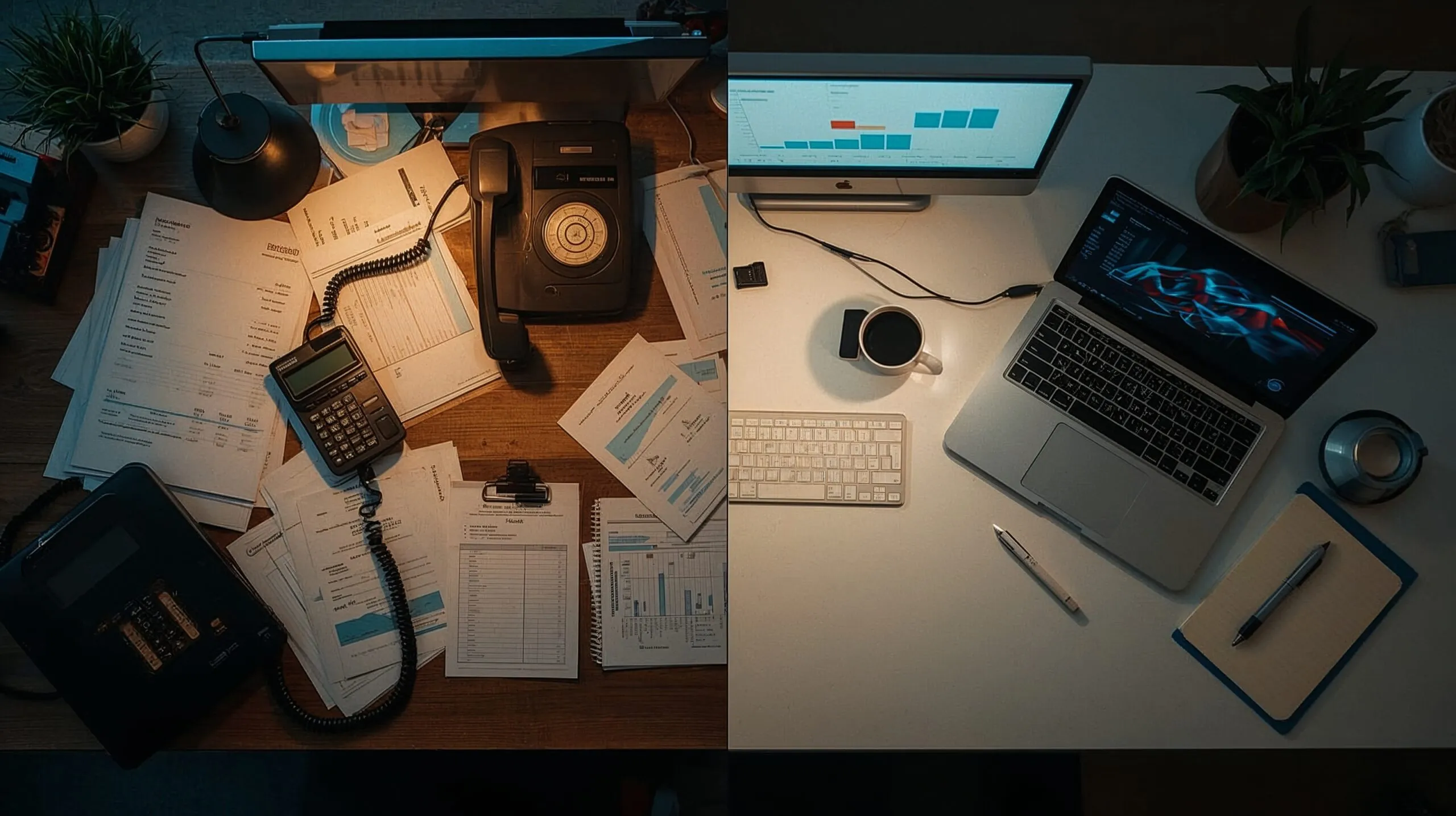
Revenue vs. Architecture
Most people think the goal of a business is revenue. It’s not. Revenue is the scoreboard. The goal is architecture. How is the revenue generated? Can it grow without you? Does it compound or does it reset to zero every month?
Palm Beach Home Pros was the “before.” High revenue, no architecture. Every month started at zero. If I didn’t sell, nothing happened. If I didn’t manage campaigns, clients left. The business was me. And a business that is you has a ceiling exactly as high as your energy and hours allow.
HDR is the “after.” The architecture was built first. 179 files. 10 API integrations. A credit system, a queue system, a partner network, a widget product, a Chrome extension. All of it runs on infrastructure that doesn’t need me to be online for a customer to get value. The system is the product. I’m the architect, not the engine.
The revenue from HDR isn’t bigger than Palm Beach Home Pros yet. It will be. But even if it never gets bigger, the structure is fundamentally different. One was a treadmill. The other is a machine. And machines scale. Treadmills just wear you out.
If you’re running something right now that makes money but requires every hour you have — pay attention to that. The revenue feels good. The growth chart looks right. But ask yourself one question: if you disappeared for 30 days, would the business still function? If the answer is no, you didn’t build a business. You built a job. And there’s no amount of revenue that turns a job into a business. Only architecture does that.
Want help redesigning your business for compounding instead of linear growth? My strategy calls are for founders who know something needs to change structurally — not just tactically. One call. Real architecture. Real clarity.
Book a Strategy Call